Lithium-Thionyl Chloride batteries are primary cells, i.e. NOT rechargeable.
They were designed in the United States in the late 50s, mainly for military and aerospace applications.
Subsequently, development shifted towards civilian applications, thanks to the superior performance compared to existing batteries.
High nominal voltage Up to 3,6 V, depending on the discharge rate and temperature.
High energy density Up to 420 Wh/kg, approximately 4 times higher than alkaline batteries.
Low self-discharge: After 10 years of storage, Lithium-Thionyl Chloride batteries have a residual capacity of about 90% of the initial capacity.
Wide temperature range: They offer the highest operating temperature range among sources
of autonomous energy: from – 55°C to + 125°C depending on the construction technology
Security
Lithium-Thionyl Chloride batteries are hermetic thanks to glass-to-metal sealing technology.
The ad alta potenza versions (spiral technology) are also equipped with a PTC to protect against possible short circuits.
Available formats Lithium-Thionyl Chloride batteries are available in the following formats:
- cylindrical
- button
- Max. Continuous current: 50mA
- Max. Pulse current: 100mA
- Operating temperature: -55 ° C to 85 ° C
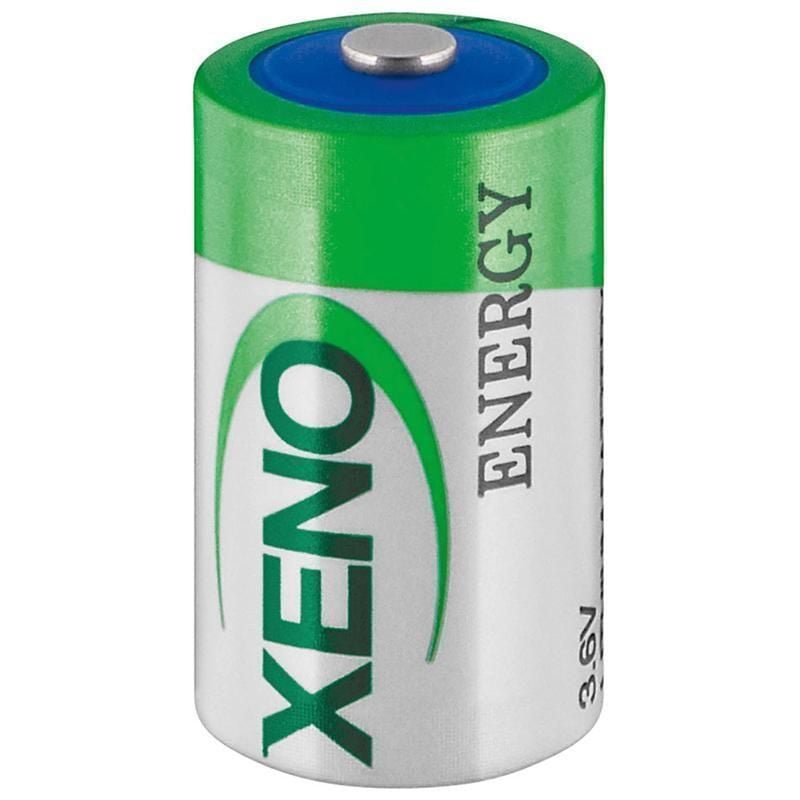
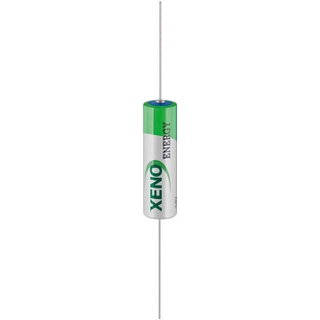
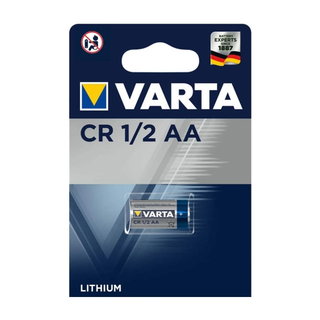
- model 1/2 AA (ER14250)
- voltage 3,6 V
- capacity 1200 mAh
- Length 25,2 millimeters
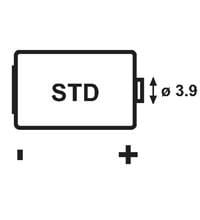
- diameter 14,5 mm
- weight 9,2 g
- Battery 1/2AA (ER14250) 3,6 V 1200mA lithium thionyl chloride



Comments (0)
Your review appreciation cannot be sent
Report comment
Report sent
Your report cannot be sent